
RECAP: FIONA DAVIS NEW YORK CITY TRIP
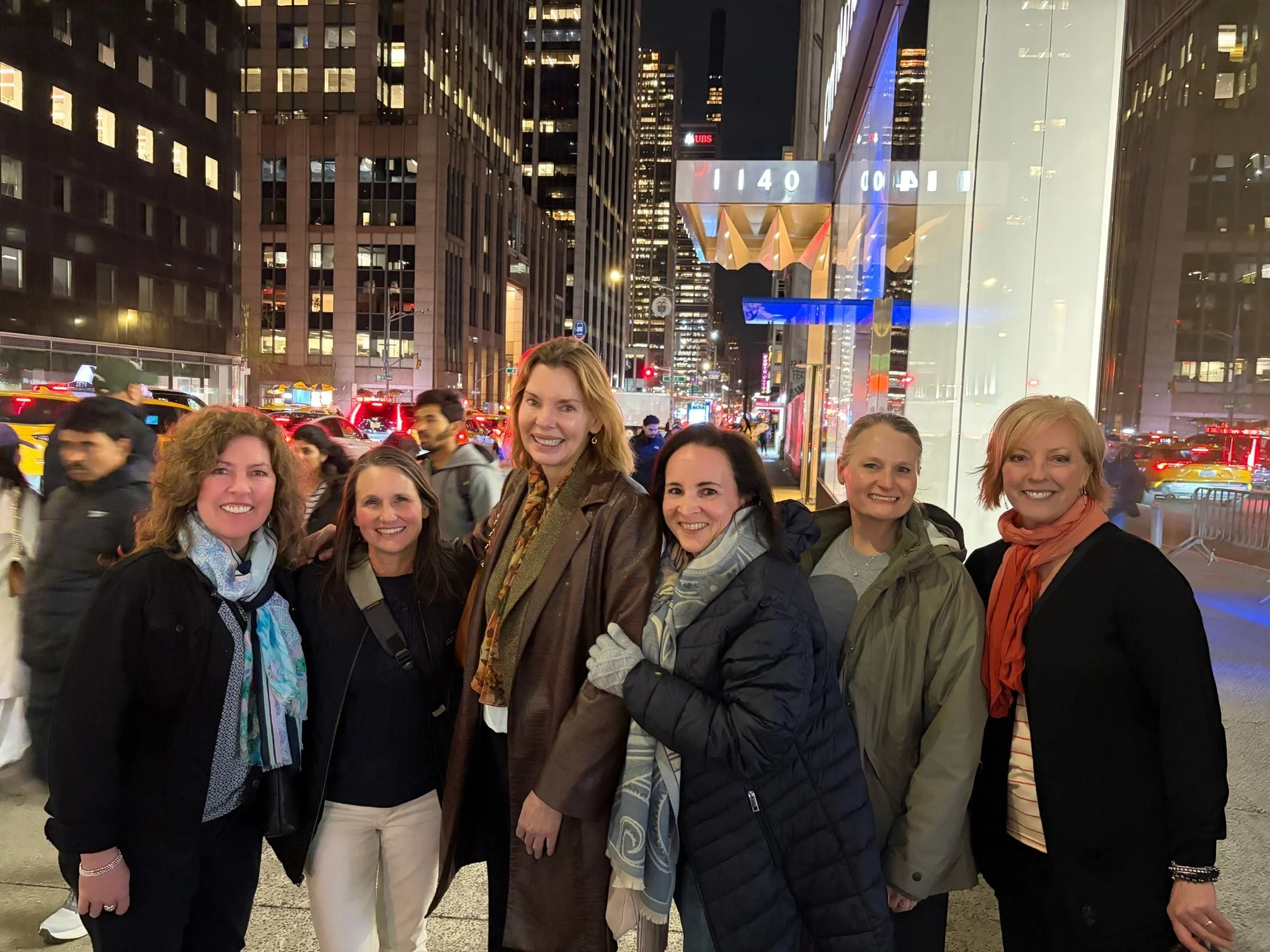
Thursday Evening: Dinner with Fiona at Lattanzi, Theatre Row We gathered for the first time over a long Italian dinner on West 46th Street — the kind of meal that starts with strangers and ends with plans to travel together again. Fiona joined us, and just like that, the trip had a heartbeat. Friday: The Dakota, Central Park, The Met, The Frick Our guide Kevin Draper met us in the lobby, and from that moment on, New York became a different city. Kevin is a historian by training and a storyteller by nature — the kind of guide who makes you feel that every block has been waiting for you to notice it. We walked to the Dakota Building, the setting of *The Address*, and through Strawberry Fields on our way to the Upper East Side. At the Metropolitan Museum of Art — the backdrop for Fiona's newest novel, The Stolen Queen — we had time to wander galleries that now felt inhabited by characters we knew. Then on to the Frick Collection, the setting of *The Magnolia Palace*, past the Barbizon Hotel (The Dollhouse) and the Pulitzer Fountain, whose statue inspired one of the novel's central characters. That evening: dinner with Fiona again at Kellari Taverna — Greek food, good wine, and a table that didn't want to end. Saturday: Grand Central, Fifth Avenue, Radio City, Moulin Rouge We met Kevin on foot for a morning that moved from Grand Central Terminal — the setting of *The Masterpiece* — up Fifth Avenue past the New York Public Library, Bergdorf Goodman, St. Patrick's Cathedral, and Rockefeller Center, all the way to Radio City Music Hall, the setting of *The Spectacular*. We finished with a private guided tour inside Radio City itself. That evening, a final dinner with Fiona at Frankie & Johnnies — a classic New York steakhouse two blocks from the theatre — before walking to the Al Hirschfeld for *Moulin Rouge* on Broadway. Fourteen women in the orchestra, completely swept away. "Where else could a group of mostly strangers connect this easily?" One of our travelers, Renee, said that at the table on our last evening. She looked around at women who had arrived three days earlier, not knowing each other, and the question answered itself. That's what I've come to understand about literary travel. The books do something that a destination alone cannot. They give you a shared language before you ever arrive. By the time you're standing in front of the Dakota or sitting in the Egyptian galleries at the Met, you're not a tourist. You're a reader who has finally shown up. This was our second Fiona Davis journey. The first had eight travelers. This one had fourteen, with several returning. I don't take that lightly. If you've been curious about what Novel Travels actually feels like — this is it.